
.jpeg)
----
Open any coding forum, listen in on Reddit, or drop into a developer Discord, and you’ll spot the same headline: “Will AI replace programmers this time?” It’s not just clickbait, there is real anxiety behind the question. As 2025 unfolds, AI code assistants (Copilot, Gemini, Replit Ghostwriter, and more) are writing tests, debugging, and even scaffolding whole apps. The transformation is so quick it feels like a tidal wave. Developers worry: Will my skills become obsolete overnight?
But pause. In the trenches of real software teams, the story is far more nuanced. Yes, AI is now a basic toolkit, not a novelty. Google’s 2025 DORA report shows nearly 90% of pros rely on AI for coding, testing, or debugging, and top engineers are speeding up tedious tasks by at least 30%. Still, AI “writing your app” is, at best, half the movie.
“AI is now a basic toolkit, not a novelty. Top engineers are speeding up tedious tasks by at least 30%. Still, AI ‘writing your app’ is, at best, half the movie.”
Let’s get real: some developer anxiety is justified. For years, companies measured programming value in lines of code, speed, and bug count. So when a bot offers production-grade code in seconds, it feeds an old insecurity: you could be replaced by a smarter, faster machine. But surveys and interviews paint a different reality: the best software still depends on empathy, architecture, risk judgment, and business context. AI can mimic patterns, but it can’t set the big-picture vision or fix what it doesn’t “understand”.
And let’s be blunt: don’t trust AI-generated code blindly. Real-world developers catch subtle bugs, weird security holes, and ghastly style mismatches in code produced by even the best AI tools.
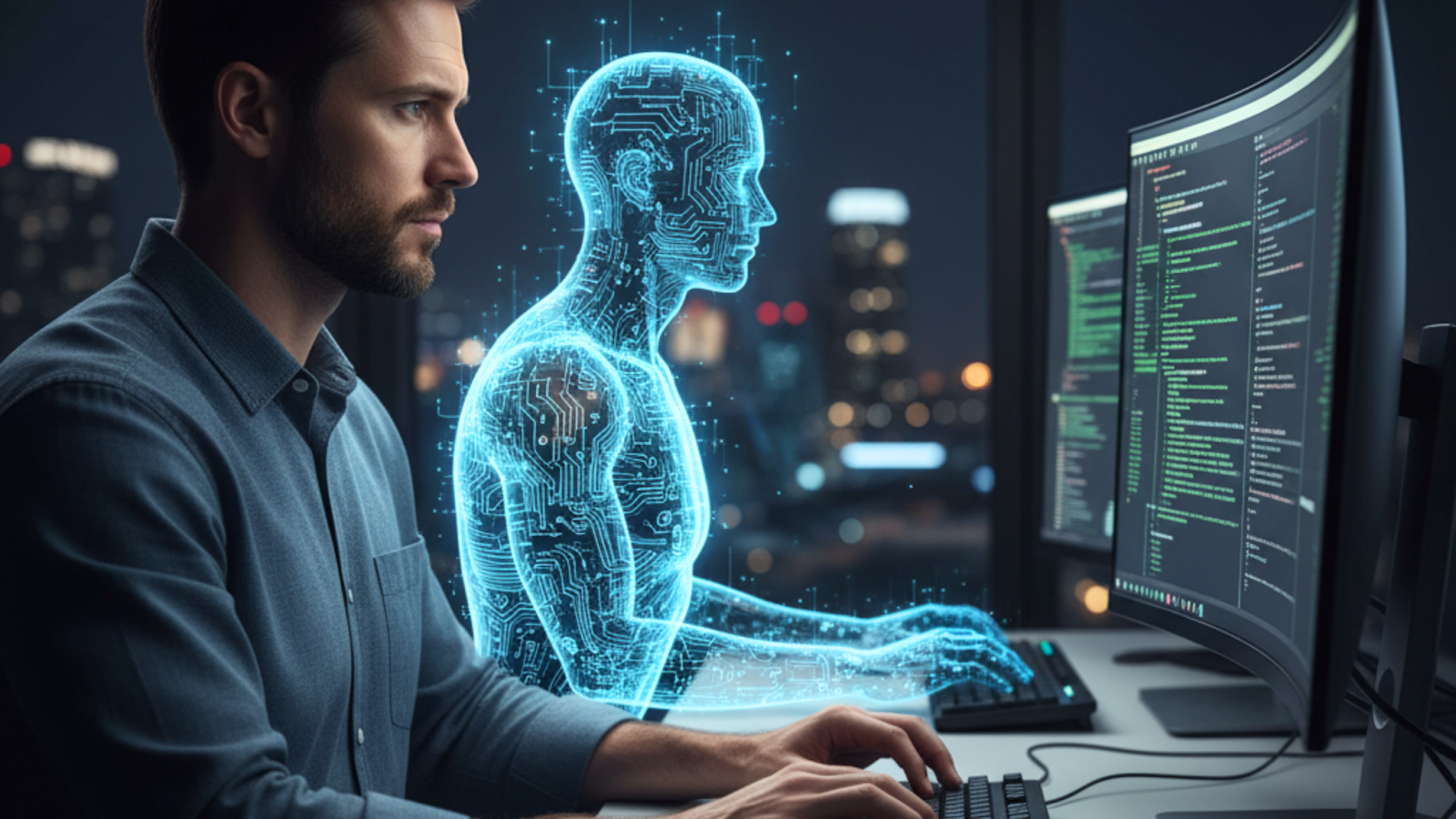
Across today’s leading companies, AI is quietly shifting the ground beneath software development. Code that used to take weeks now emerges in a matter of days as AI helps teams move prototypes through production at an accelerated pace. Rather than burning out on manual bug fixes or boilerplate, developers find themselves freed up for more creative and challenging work, while repetitive tasks become almost invisible thanks to smart automation.
Compliance and security are also evolving: AI-backed review processes flag issues and make robust systems easier to maintain, which was once a huge headache for regulated industries. Suddenly, keeping complex codebases clean and audit-ready feels realistic even as projects scale.
What’s really striking, though, is how this revolution in tooling lets non-technical staff, analysts, marketers, operations leads contribute ideas in ways never possible before. With intuitive AI assistants and low-code platforms, the definition of who gets to build shifts outward, giving organizations speed and agility across every department. The term “vibe coding” emerged from new methods of developing software using generative AI prompts, with less stress and technical complexity.
The combined result? Businesses aren’t just saving time. They’re unlocking new levels of value, using AI to amplify human expertise and deliver projects that stretch beyond what traditional workflows offered, whether that means automating routine processes, safeguarding critical information, or expanding innovation across the org chart.
“Code that used to take weeks now emerges in a matter of days as AI helps teams move prototypes through production at an accelerated pace.”
Here’s what you actually get with the new wave of AI dev tools:
But the risks are real. AI can hallucinate, duplicate components, or “forget” crucial context. Many teams now assign senior engineers to sanity-check every AI commit, especially for security or compliance-sensitive work. AI “replaces” basic coding grunt work and some junior roles, but not the craft of software design or the ability to ask the right business questions.
Don’t get trapped in the “humans vs AI” frame. The smartest organizations are blending AI agility with senior dev stewardship. At SDC LEKA and beyond, the new best practice goes like this:
AI won’t replace developers, but developers who master AI will replace those who don’t. Adaptability is now a core engineering skill.
“The future isn’t about being replaced. It’s about orchestrating people, tools, and agents to deliver smarter business outcomes.”
Expect these trends to accelerate:
So, to summarize, whether you’re an organization or an individual using AI, the real question is: when should you trust AI-generated code? Trust it for boilerplate, documentation, prototyping, and learning, but never rely on it blindly for mission-critical, security-sensitive, or domain-specific applications. Always review its output carefully, validate results with human expertise, and refine your systems before deployment.
The bottom line: focus less on what AI replaces, and more on what only you can do. The next decade belongs to the adaptable, the curious, and those who see AI as their ultimate power tool, not as a rival.
At SDC LEKA, we combine AI, smart automation, and top-tier tech expertise to help businesses scale smarter, strengthen operations, and keep people at the center of transformation.
Whether you’re exploring how to integrate AI responsibly or accelerate your digital transformation, our experts can help you design and deploy intelligent systems that deliver measurable results.
Connect with us and discover how SDC LEKA can help you tackle your next challenge, and stay tuned to our blog for more insights on low‑code, no‑code, custom software development, and more technology business insights

Dolores Crazover is a transformational Software & AI Engineer and the founder of SDC LEKA, a competitive IT services company driven by the power of Innovation.
SDC LEKA helps businesses grow smarter and strengthen operations through AI, automation, human-centered design, and access to elite tech experts revolutionizing how organizations operate and how people experience technology.
With a background in science and engineering and a career built at the intersection of technology, strategy, and impact, Dolores has led global initiatives across health & beauty, luxury, consulting, fintech, and digital innovation. She has co-founded several ventures, including an AI- and VR-driven wellness platform that delivered intelligent B2B experiences for global beauty and health brands.
As a tech founder at heart, she has co-built international AI communities spanning 30 chapters (including Miami), connecting founders, developers, investors, and partners to collaborate and shape the next wave of intelligent innovation.
Passionate about bridging technology and entrepreneurship, she guides innovation leaders and cross-functional teams, from emerging ventures to global organizations to scale with purpose, turning bold ideas into meaningful impact. Beyond business and technology, Dolores finds inspiration in nature, music, and the quiet beauty that fuels creativity and wonder.

.jpeg)
.png)
.svg)
